Got Lice?
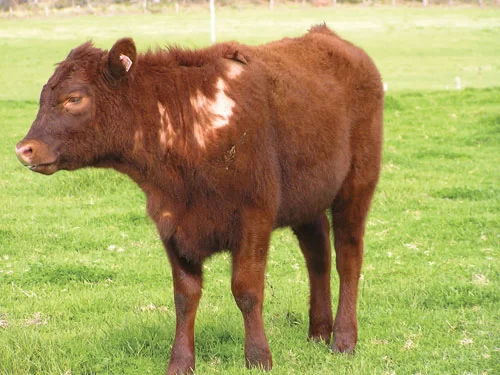
If your cattle are itching and losing hair around their neck or tail, it’s likely that your herd could have a lice problem. Lice infestations are common this time of year when cattle are in closer quarters as it is quickly spread by close contact. Here are some tips and tricks that can help eliminate infestations and increase overall performance.
What products are available?
Pour-on dewormers are the only products labeled for both sucking and biting lice. While injectable dewormers are effective against sucking lice, they aren’t effective against biting lice which is what a large proportion of herds become infected with. So they aren’t ideal for treatment.
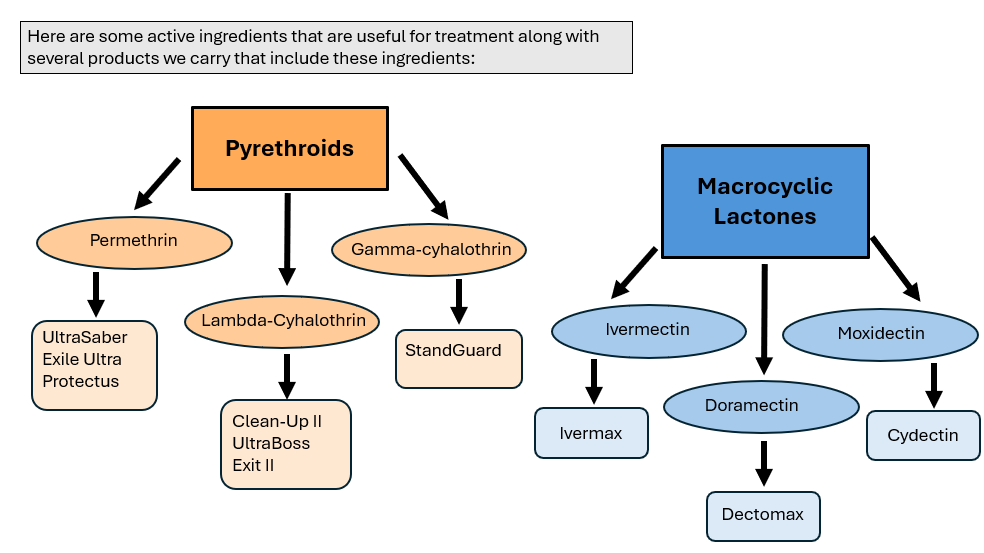
Some products such as Protectus and CleanUp II also contain an Insect Growth Regulator called Diflubenzuron, this helps to eliminate all life stages more effectively than just a Pyrethroid or a Macrocyclic Lactone alone. Another ingredient you may see is Piperonyl Butoxide, this is simply a compound that enhances the activity of Pyrethroids.
How should I be treating for lice?
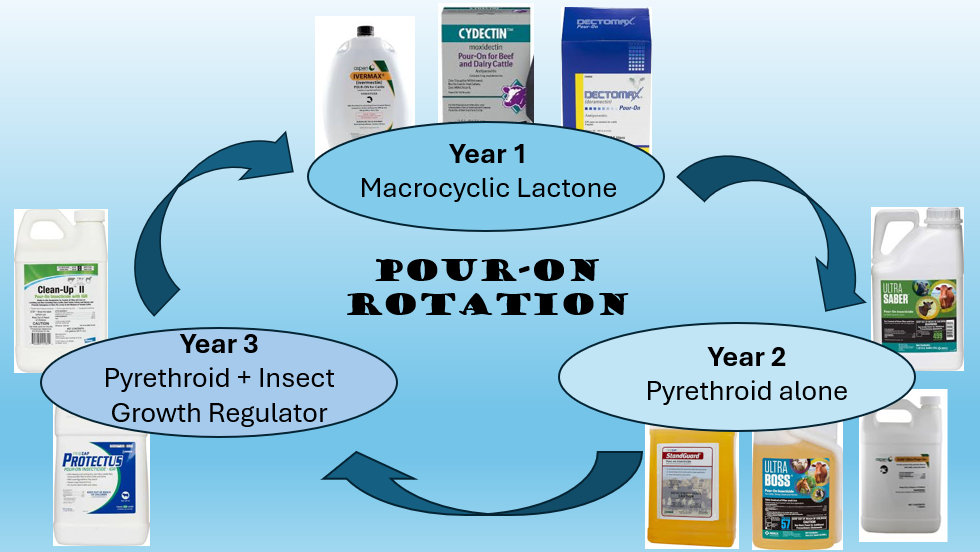
We recommend treating your herd for lice yearly when you usually have issues, commonly January or February. Developing a pour-on rotation program is a cost effective way to help increase the success of each year’s treatment.
Can lice become resistant to products?
Similarly to internal parasites and flies, resistance is possible. Specifically, there is an emerging resistance to Ivermectin-type products. In general, we recommend a yearly rotation of pour-on products to avoid developing resistant strains of lice.
Here is our recommended yearly rotation that should work for the majority of herds:
Choose 1 product from each category to treat your herd once or twice in the winter and then rotate to another product from the next category the following winter.